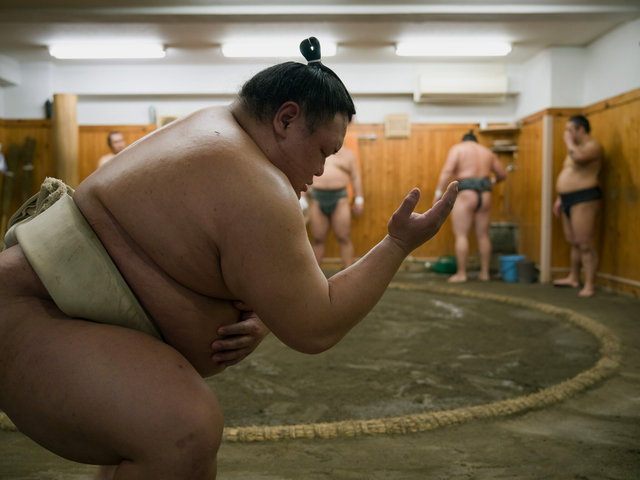
Sumo wrestlers train inside the dohyō, a circular clay ring whose straw boundary evokes Shinto concepts of purification and sacred enclosure. Within this highly ritualised space, strength and exposure exist simultaneously.
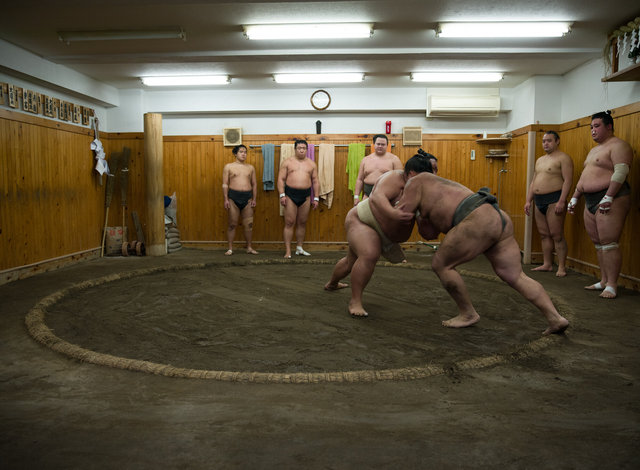
KAKUREMINO: In the Dohyō - Tokyo, 2025
The dohyō contains force so completely that repetition becomes unremarkable. This logic reverberates beyond the stable, where the act of bringing down operates not only through physical dominance, but through hierarchy, reputation, and the social pressures surrounding masculinity, performance, and control.
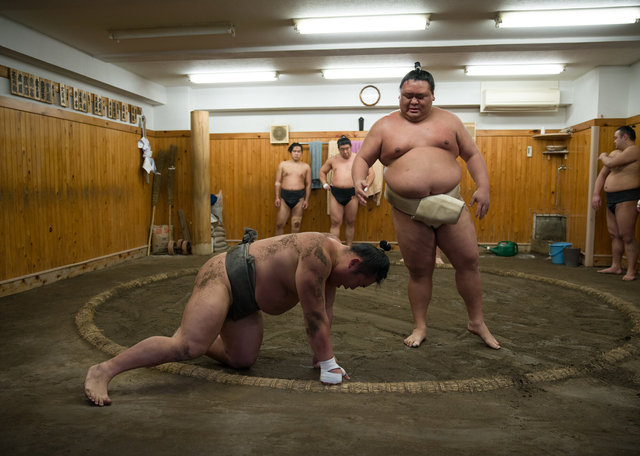
KAKUREMINO: In the Dohyō - Tokyo, 2025
The rules of sumo wrestling are deceptively simple: force your opponent out of the ring or make any part of his body other than the soles of his feet touch the ground.
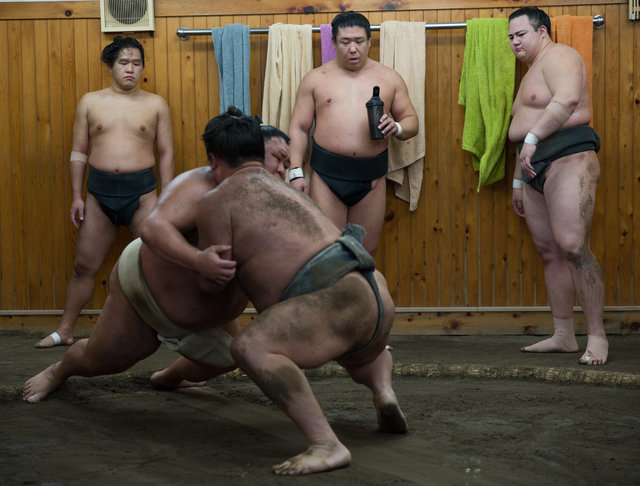
KAKUREMINO: In the Dohyō - Tokyo, 2025
Throughout the training session, bodies accumulate visible signs of endurance: dirt, sweat, cuts, abrasions, and bandages.
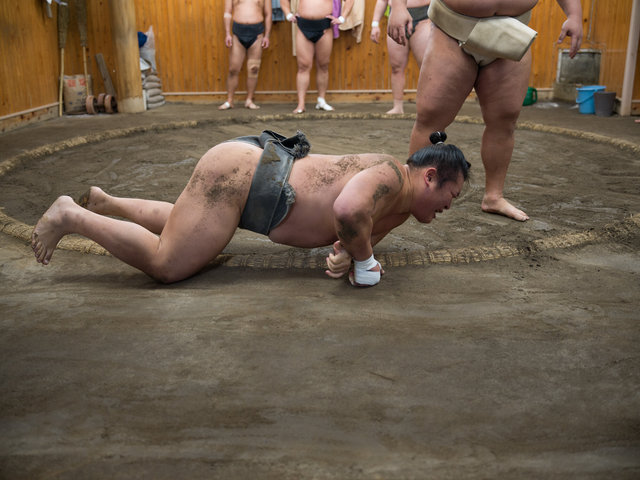
KAKUREMINO: In the Dohyō - Tokyo, 2025
Over time, the spectacle of physical power gives way to something far more fragile: exhaustion, repetition, vulnerability, hierarchy, pain, recovery, and the strain of repeatedly confronting physical and psychological limits.
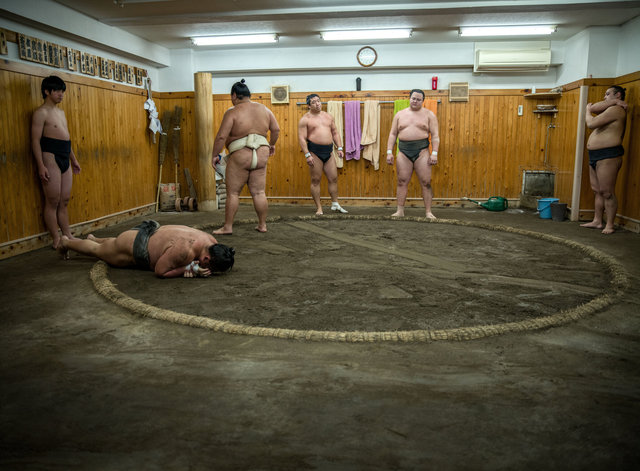
KAKUREMINO: In the the Dohyō
Through ritual and repetition, forms of male vulnerability rarely exposed elsewhere gradually surface.
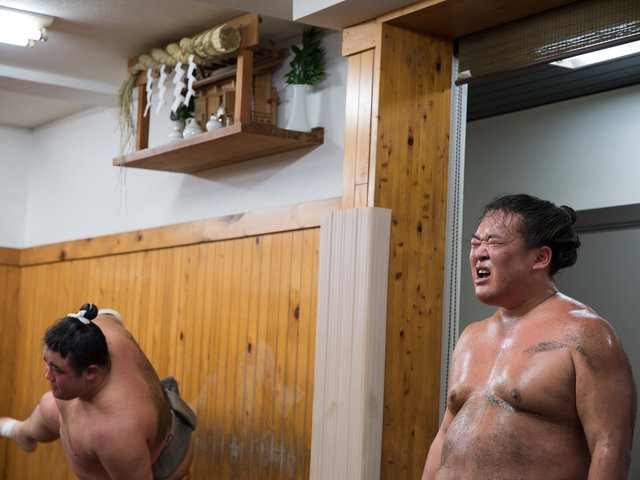
KAKUREMINO: In the Dohyō - Tokyo, 2025
The dohyō functions not only as an arena of sanctioned struggle, but as a contained psychological space in which balance is constantly tested with destabilisation publicly visible through the body.
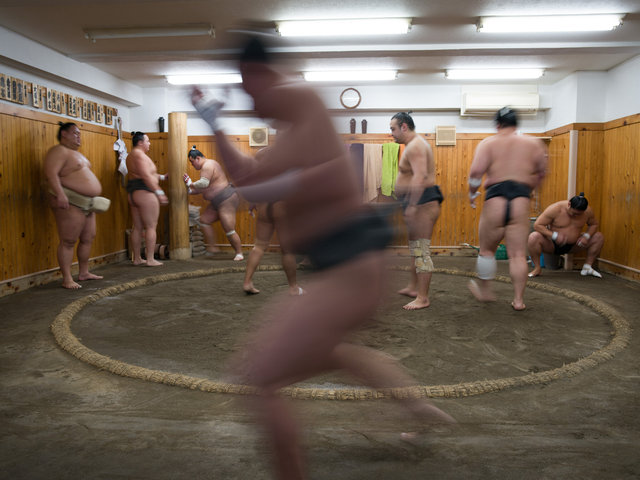
KAKUREMINO: In the Dohyō - Tokyo, 2025
The photographs move between motion and stillness, between standing and collapse, tracing the threshold between control and surrender.